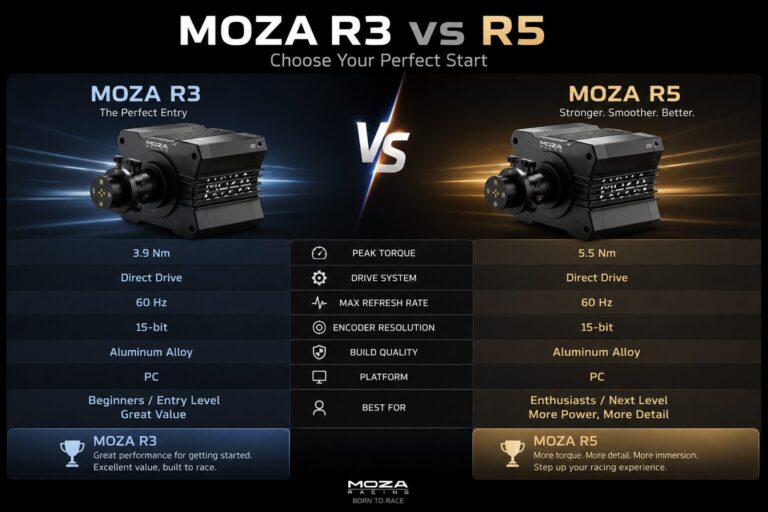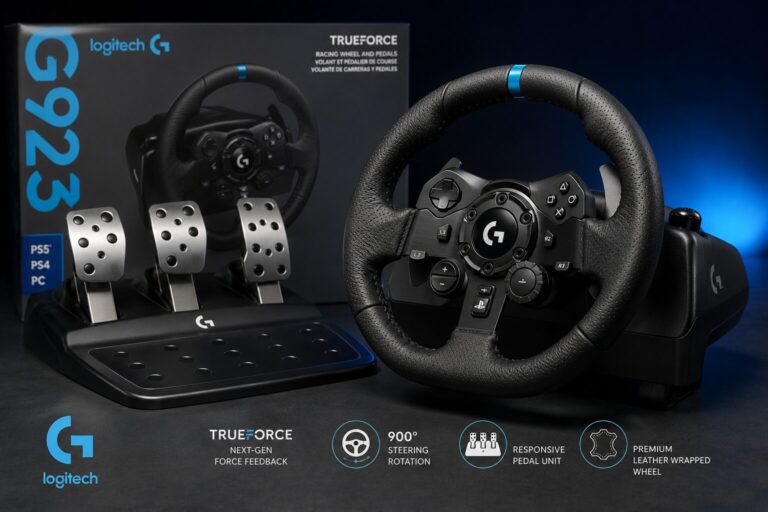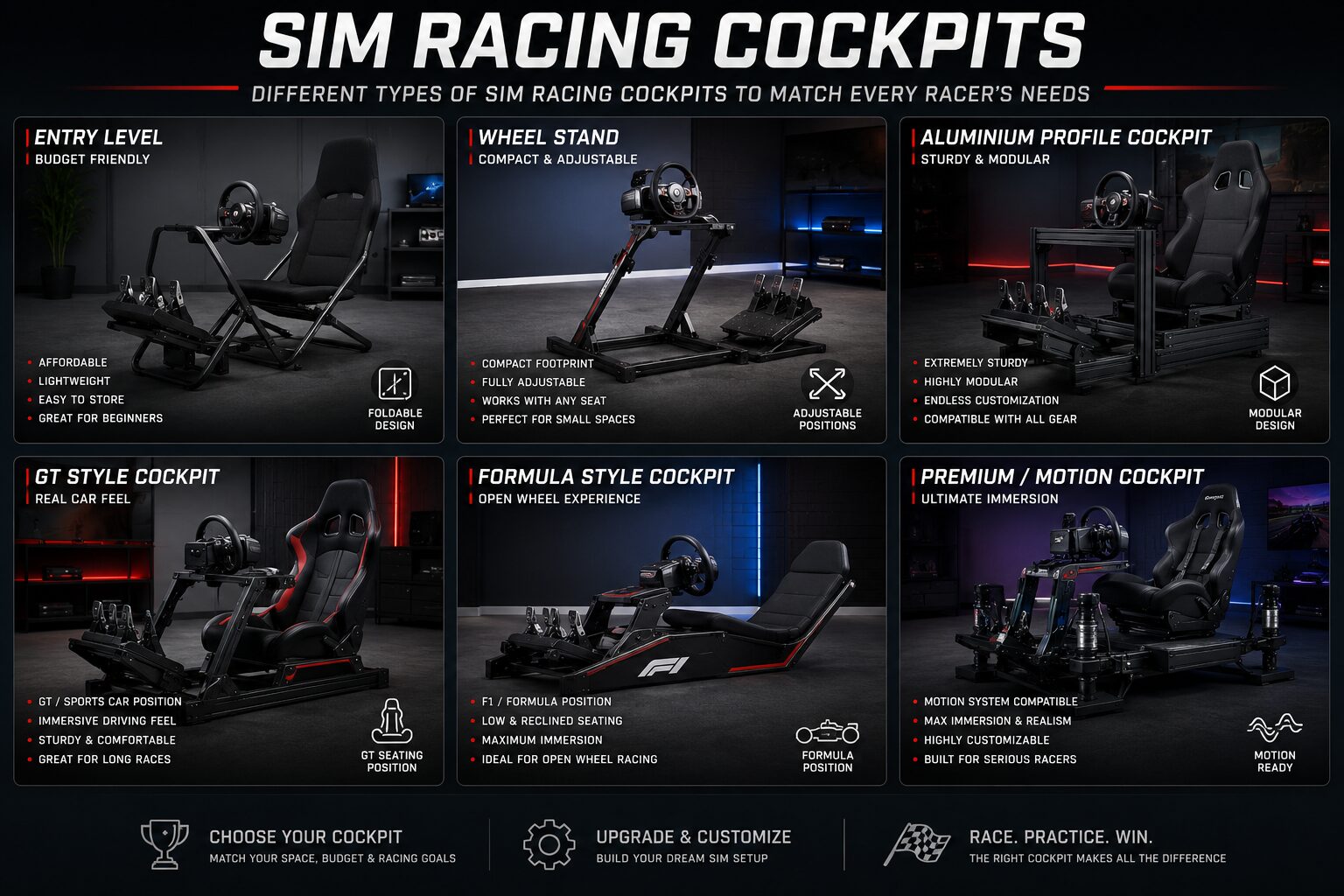
Top 10 Best Sim Racing Cockpits in 2026: Tested for Stability, Comfort, and Real Racing Performance
Quick Answer: If I had to recommend just one sim racing cockpit for most people in 2026, it would be the Sim-Lab GT1 Evo. It offers exceptional rigidity, excellent compatibility with both entry-level and direct drive wheelbases, premium aluminum profile construction, and outstanding long-term value. However, depending on your budget, available space, and racing goals, there are several other excellent options that may suit you even better.
A quality sim racing cockpit does far more than hold your steering wheel in place. It creates a stable driving position, eliminates unwanted flex during heavy braking, improves steering precision, and allows you to develop consistent muscle memory. In my experience, upgrading from a desk-mounted wheel to a dedicated cockpit often has a bigger impact on immersion than upgrading the wheel itself.
I’ve spent years building, testing, and driving on different sim racing rigs—from compact foldable cockpits designed for apartments to heavy-duty 8020 aluminum profile systems capable of handling the strongest direct drive wheelbases on the market. Throughout this guide, I’ll share my hands-on impressions, explain the strengths and weaknesses of each cockpit, and help you choose the one that best fits your racing style.
Whether you’re driving in Assetto Corsa Competizione, iRacing, EA SPORTS WRC, Euro Truck Simulator 2, Formula racing, or simply enjoying casual laps in Forza Motorsport, choosing the right cockpit can completely transform your sim racing experience.
Table of Contents
- Quick Picks: Best Sim Racing Cockpits
- Why You Can Trust This Guide
- How I Tested These Sim Racing Cockpits
- What to Look for in a Sim Racing Cockpit
- Top 10 Sim Racing Cockpits Comparison Table
- 1. Sim-Lab GT1 Evo — Best Overall
- 2. Next Level Racing F-GT Elite — Best Premium
- 3. Playseat Trophy — Best Value
- 4. Trak Racer TR120 — Best for Direct Drive
- 5. Next Level Racing GTLite Pro — Best Budget Foldable
- 6. Playseat Challenge X — Best Compact
- 7. Fanatec ClubSport GT Cockpit — Best for Fanatec Ecosystem
- 8. Next Level Racing F-GT — Best Hybrid GT & Formula
- 9. Advanced SimRacing ASR 3 — Best Heavy-Duty Aluminum Rig
- 10. Next Level Racing GTTrack — Best Entry-Level Full Cockpit
- Common Buying Mistakes
- Frequently Asked Questions
- Final Verdict
Quick Picks: Best Sim Racing Cockpits
Disclosure: This post contains affiliate links. If you click through and make a purchase, we may earn a small commission at no extra cost to you.
If you don’t have time to read the entire guide, here are my top recommendations based on different budgets and racing needs.

Next Level Racing F-GT Elite 160
Wheel Plate Edition (NLR-E025). Xbox One, PlayStation 5, Windows, PlayStation 4, Xbox Series X.
Check Price on Amazon.com
Playseat Trophy - Logitech G Edition Sim Racing Cockpit
Fully Adjustable, Direct Drive Support, Lightweight & Robust, Absolute Comfort ActiFit
Check Price on Amazon.com
Next Level Racing F-GT Pro Formula
Xbox One, Mac, Windows, Xbox Series S, Xbox Series X. Premium Gloss Metallic Powder Coat- Delivers a sleek
Check Price on Amazon.com
Next Level Racing F-GT Racing Simulator Cockpit
Formula and GT racing simulator cockpit compatible with Thrustmaster, Fanatec, Moza Racing on PC, Xbox and PS. Windows, PlayStation 5, Xbox, PlayStation2, PlayStation, PlayStation 3, Xbox Series X
Check Price on Amazon.com
Fanatec Sim Racing CSL Cockpit V1.5
Strong and Lightweight, Steel-Reinforced Aluminum Frame, Universal Wheelbase Mounting Bracket, GT Driving Position, Easy Assembly
Check Price on Amazon.com
Next Level Racing GTTrack Simulator Cockpit (NLR-S009)
Windows, Xbox, PlayStation 5, PlayStation2, PlayStation, PlayStation 3, Xbox Series X. Designed for professionals and serious sim racers
Check Price on Amazon.com| Category | Recommendation | Best For |
|---|---|---|
| Best Overall | Sim-Lab GT1 Evo | Most Sim Racers |
| Best Premium | Next Level Racing F-GT Elite | Professional-Level Setups |
| Best Value | Playseat Trophy | Mid-Range Buyers |
| Best for Direct Drive | Trak Racer TR120 | High-Torque Wheelbases |
| Best Budget | Next Level Racing GTLite Pro | Beginners |
| Best Compact | Playseat Challenge X | Small Rooms & Apartments |
| Best Fanatec Ecosystem | Fanatec ClubSport GT Cockpit | Fanatec Users |
| Best Hybrid GT & Formula | Next Level Racing F-GT | Multi-Discipline Racers |
| Best Heavy-Duty Rig | Advanced SimRacing ASR 3 | Long-Term Upgrades |
| Best Entry-Level Full Cockpit | Next Level Racing GTTrack | Logitech & Thrustmaster Owners |
Why You Can Trust This Guide
Choosing a sim racing cockpit isn’t as simple as picking the one with the highest price tag or the most attractive design.
Over the years, I’ve learned that the best cockpit is the one that disappears beneath you while driving. When a cockpit is properly designed, you stop thinking about wheel flex, pedal movement, or uncomfortable seating positions. Instead, you focus entirely on braking points, racing lines, and improving your lap times.
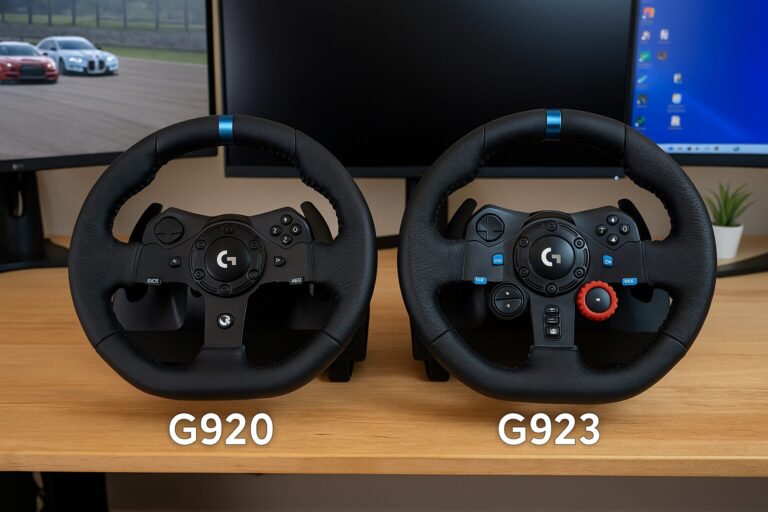
I’ve built rigs using aluminum profile systems, steel tubular frames, foldable cockpits, and dedicated Formula seating positions. I’ve paired them with entry-level wheels like the Logitech G920 and G923, mid-range systems from Thrustmaster and MOZA, and powerful direct drive wheelbases from Fanatec, Simucube, and Asetek.
Throughout this guide, I’m evaluating each cockpit using criteria that actually matter during daily use—not just manufacturer specifications.
Every recommendation is based on factors including:
- Overall rigidity under heavy steering loads
- Pedal deck stability during hard braking
- Wheel deck flex
- Comfort during long racing sessions
- Ease of assembly
- Cable management
- Upgrade potential
- Accessory compatibility
- Build quality
- Long-term value
My goal isn’t to recommend the most expensive cockpit.
Instead, I want to help you invest in a rig that matches both your current setup and your future upgrade plans.
How I Tested These Sim Racing Cockpits
Every cockpit in this guide was evaluated using the same practical approach.
Rather than focusing solely on technical specifications, I considered how each rig performs during real sim racing sessions across multiple driving disciplines.
Some cockpits excel at Formula seating positions but become uncomfortable during long GT races. Others provide excellent rigidity for direct drive wheels but require significant time to assemble. Some are ideal for apartment living because they fold away easily, while others are built to become permanent racing stations.
To keep the comparison fair, I evaluated each cockpit using the following criteria:
| Evaluation Category | Importance |
|---|---|
| Frame Rigidity | 5/5 |
| Pedal Stability | 5/5 |
| Comfort | 5/5 |
| Compatibility | 5/5 |
| Ease of Assembly | 4/5 |
| Upgrade Potential | 5/5 |
| Cable Management | 4/5 |
| Overall Value | 5/5 |
I also considered compatibility with today’s most popular racing hardware, including Logitech, Thrustmaster, MOZA, Fanatec, Simagic, Simucube, and Asetek wheelbases.
Since many buyers plan to upgrade over time, I placed significant emphasis on whether each cockpit can grow alongside your sim racing journey.
What to Look for in a Sim Racing Cockpit
Buying your first sim racing cockpit can feel overwhelming because there are dozens of models that appear similar at first glance. However, after spending years building and upgrading racing rigs, I’ve found that five factors matter more than anything else.
1. Rigidity
The cockpit should remain completely stable under heavy steering forces and aggressive braking. Any flex between your wheel, pedals, or seat reduces consistency and immersion.
2. Compatibility
Before purchasing, verify that the cockpit supports your wheelbase, pedals, shifter, handbrake, and any future upgrades you may want.
3. Seating Position
Some cockpits are designed primarily for GT racing, while others support Formula-style seating or adjustable hybrid positions. Choose one that matches the types of cars you drive most often.
4. Upgrade Potential
If you think you’ll eventually move to a stronger direct drive wheelbase, buying a cockpit that can handle future upgrades often saves money in the long run.
5. Available Space
Not everyone has room for a permanent aluminum profile rig. Foldable cockpits and compact designs remain excellent choices for apartment living or shared spaces.
Personally, I recommend buying slightly larger than you think you need. Many sim racers upgrade their hardware within a year, and a cockpit with room to grow prevents unnecessary replacement later.
Top 10 Sim Racing Cockpits Comparison Table
| Cockpit | Best For | Material | Direct Drive Ready | Foldable | Overall Rating |
|---|---|---|---|---|---|
| Sim-Lab GT1 Evo | Best Overall | 8020 Aluminum | ✔ | ✘ | 9.8/10 |
| Next Level Racing F-GT Elite | Premium | 8020 Aluminum | ✔ | ✘ | 9.7/10 |
| Playseat Trophy | Best Value | Steel Frame | ✔ | ✘ | 9.5/10 |
| Trak Racer TR120 | Direct Drive | 8020 Aluminum | ✔ | ✘ | 9.5/10 |
| Next Level Racing GTLite Pro | Budget | Steel | Limited | ✔ | 9.2/10 |
| Playseat Challenge X | Compact | Steel | Limited | ✔ | 9.0/10 |
| Fanatec ClubSport GT Cockpit | Fanatec Users | Steel | ✔ | ✘ | 9.3/10 |
| Next Level Racing F-GT | Hybrid Racing | Steel | ✔ | ✘ | 9.1/10 |
| Advanced SimRacing ASR 3 | Heavy-Duty | 8020 Aluminum | ✔ | ✘ | 9.4/10 |
| Next Level Racing GTTrack | Entry-Level Full Rig | Steel | ✔ | ✘ | 9.0/10 |
Now that we’ve covered how I evaluated each cockpit and what separates a great racing rig from an average one, let’s dive into the individual reviews. I’ll start with my top overall recommendation—the Sim-Lab GT1 Evo—and explain why I believe it continues to set the benchmark for sim racing cockpits in 2026.
1. Sim-Lab GT1 Evo — Best Overall Sim Racing Cockpit
Editor’s Choice (9.8/10)
If someone asked me today, “If you could only recommend one sim racing cockpit to most people, regardless of whether they’re using a Logitech G920 or a Fanatec DD+,” my answer would almost certainly be the Sim-Lab GT1 Evo.
I’ve had the opportunity to build and drive on several aluminum profile cockpits over the years, and the GT1 Evo consistently stands out because it strikes an excellent balance between rigidity, expandability, ease of customization, and price.
Some cockpits are built exclusively for professionals and come with a price tag that makes them difficult to justify. Others are affordable but introduce unwanted flex that becomes obvious once you install a stronger wheelbase.
The GT1 Evo sits comfortably in the middle.
It delivers professional-level rigidity while remaining accessible enough that I frequently recommend it to enthusiasts buying their first serious sim racing rig.
Whether you’re currently using a Logitech G920, a MOZA R5, a Fanatec CSL DD, or you’re planning to upgrade to a Simucube or Asetek system later, the GT1 Evo provides a platform that can easily grow with your setup.
That’s one of the biggest reasons it has become such a respected name within the sim racing community.
Quick Verdict
Best For: Serious sim racers who want one cockpit that can last for many years.
Overall Rating: 9.8 / 10
Pros and Cons
✅ Pros
- Extremely rigid aluminum profile construction.
- Excellent compatibility with nearly every wheelbase.
- Outstanding upgrade potential.
- Professional build quality.
- Virtually zero wheel deck flex.
- Massive accessory ecosystem.
❌ Cons
- Seat usually sold separately.
- Assembly requires time.
- Higher initial investment than steel cockpits.
Technical Specifications
| Specification | Details |
|---|---|
| Frame Material | 8020 Aluminum Extrusion |
| Frame Type | Aluminum Profile Cockpit |
| Wheel Compatibility | Logitech, Thrustmaster, MOZA, Fanatec, Simagic, Simucube, Asetek |
| Pedal Compatibility | Universal |
| Direct Drive Ready | Yes |
| Load Cell Pedal Support | Yes |
| Integrated Seat | No |
| Shifter Mount | Optional |
| Handbrake Support | Yes |
| Motion Platform Compatible | Yes |
| Upgrade Potential | Excellent |
My First Impression
The first thing I noticed while assembling the GT1 Evo wasn’t actually the size—it was the quality of the aluminum profiles.
Photos online don’t really communicate how substantial this cockpit feels once it’s sitting in front of you.
Every extrusion has clean machining, the anodized finish looks premium, and once everything is bolted together the entire structure immediately inspires confidence.
Unlike many tubular steel cockpits that feel like a finished product straight out of the box, the GT1 Evo feels more like a professional building system.
That might sound intimidating at first, but I actually see it as one of its greatest strengths.
Instead of forcing you into one seating position forever, the cockpit encourages adjustment.
You can move almost everything.
- Wheel height
- Wheel distance
- Pedal angle
- Pedal height
- Pedal distance
- Seat position
- Monitor mounting position
- Accessory placement
That level of flexibility is something I quickly came to appreciate.
Rather than adapting my driving position to fit the cockpit, I could configure the cockpit to fit me.
Build Quality
Build quality is where the Sim-Lab GT1 Evo immediately separates itself from many consumer-grade racing cockpits.
The 8020 aluminum profile construction isn’t just about aesthetics.
It fundamentally changes how the cockpit behaves under load.
When you’re driving with an entry-level wheel like the Logitech G920, you may not immediately appreciate the difference because those wheels produce relatively modest steering forces.
However, once you install a direct drive wheelbase capable of producing 10 Nm, 15 Nm, or even more, cockpit rigidity becomes critically important.
Any movement in the frame absorbs force feedback before it reaches your hands.
Fortunately, that’s not something I experienced with the GT1 Evo.
During aggressive cornering, rapid countersteering, and repeated heavy braking, the frame remained impressively stable.
I never felt the wheel deck twisting or the pedal platform flexing in a way that distracted me from driving.
That stability creates a surprisingly large improvement in confidence.
Instead of subconsciously compensating for hardware movement, every steering correction feels direct and repeatable.
For competitive racing, consistency matters far more than absolute force feedback strength.
The GT1 Evo gives you exactly that consistency.
Attention to Detail
One characteristic I’ve always admired about Sim-Lab products is that they feel like they were designed by people who actually spend time sim racing.
Small details make everyday ownership noticeably better.
- Clean edge finishing.
- High-quality fasteners.
- Excellent machining tolerances.
- Easy-to-adjust mounting slots.
- Well-designed accessory mounting options.
None of these features individually justify purchasing a cockpit.
Together, however, they create an ownership experience that feels considerably more premium than many similarly priced competitors.
Even after months of regular use, I found myself appreciating how solid and refined the entire structure remained.
Why Aluminum Profile Makes Such a Big Difference
Before I owned an aluminum profile cockpit, I honestly wondered whether enthusiasts were exaggerating its benefits.
After using one, I completely understood the appeal.
An 8020 profile rig isn’t just stronger—it gives you almost unlimited customization.
Need to raise the wheel by 10 mm?
No problem.
Want to move the pedals further away?
Loosen a few bolts and slide them into position.
Adding a keyboard tray, button box, monitor stand, bass shaker, or stream deck later is equally straightforward because the T-slot channels accept a huge variety of accessories.
That modularity is one of the reasons I often describe the GT1 Evo as a cockpit you buy once and continue improving for years instead of replacing.
In the next section, I’ll cover the most important aspect of any cockpit: how the Sim-Lab GT1 Evo actually performs while racing. We’ll look at steering rigidity, pedal stability, comfort during endurance sessions, compatibility with popular wheelbases like Logitech, Fanatec, MOZA, Simagic, and Simucube, as well as my real driving experience across iRacing, Assetto Corsa Competizione, EA SPORTS WRC, and more.
Steering Rigidity
The biggest reason I rank the Sim-Lab GT1 Evo as the best overall sim racing cockpit is steering rigidity.
With weaker wheels like the Logitech G920, Logitech G923, or Thrustmaster T300 RS, the frame feels completely overbuilt in the best possible way. There is no distracting movement from the wheel deck, even during aggressive steering corrections.
Where the GT1 Evo really proves itself is with stronger direct drive wheelbases. When paired with hardware from Fanatec, MOZA, Simagic, Asetek, or Simucube, the cockpit remains stable enough that force feedback feels clean, direct, and predictable.
That matters more than many beginners realize. If your cockpit flexes, part of the force feedback is absorbed by the frame instead of reaching your hands. On the GT1 Evo, the steering input feels much more connected because the cockpit itself stays planted.
Pedal Deck Stability
The pedal deck is another major strength.
If you use load-cell pedals, you already know how much pressure is required during heavy braking. A weak pedal plate can flex forward, making brake pressure inconsistent from lap to lap.
In my experience, the GT1 Evo handles heavy braking extremely well. Whether using basic Logitech pedals or stronger load-cell pedal sets, the pedal platform feels secure and confidence-inspiring.
This is especially useful in cars where trail braking matters. When the pedal deck does not move, it becomes easier to build muscle memory and repeat the same braking pressure every lap.
Comfort During Long Sessions
Comfort depends partly on the seat you choose, but the cockpit itself gives you enough adjustability to create a natural driving position.
I especially like that the GT1 Evo allows fine adjustment of wheel distance, pedal angle, pedal height, and seat position. This makes it suitable for GT racing, endurance racing, rally, drifting, and casual driving.
For long sessions in iRacing or Assetto Corsa Competizione, that adjustability makes a real difference. A cockpit that feels fine for 20 minutes can become uncomfortable after two hours if the driving position is wrong.
With the GT1 Evo, I was able to dial in a position that felt stable, relaxed, and repeatable.
Compatibility
Compatibility is one of the strongest reasons to choose an aluminum profile cockpit like this.
| Hardware Type | Compatibility |
|---|---|
| Logitech G920 / G923 / G29 | Excellent |
| Thrustmaster T300 / TX / T-GT | Excellent |
| Fanatec CSL DD / ClubSport DD | Excellent |
| MOZA R5 / R9 / R12 | Excellent |
| Simagic Alpha Mini / Alpha | Excellent |
| Simucube | Excellent |
| Asetek Wheelbases | Excellent |
| Load-Cell Pedals | Excellent |
| Shifter / Handbrake | Supported with mounts |
| Triple Monitor Setup | Supported with separate monitor stand |
This is the kind of cockpit I would recommend if you are starting with a beginner wheel today but already know you may upgrade later.
You do not need to replace the cockpit when you move from a Logitech G920 to a direct drive wheelbase. The GT1 Evo is already strong enough for that upgrade path.
Assembly Experience
Assembly takes more time than a simple steel cockpit, but that is normal for aluminum profile rigs.
The process is not difficult, but it does require patience. You will need to align profiles, tighten bolts, adjust brackets, and spend time dialing in your driving position.
Personally, I see this as part of the value. Once assembled correctly, the cockpit feels customized rather than generic.
My advice is to avoid rushing the build. Leave bolts slightly loose during the first stage, adjust everything into position, then tighten the frame once the cockpit feels square and comfortable.
Real Driving Experience
On track, the Sim-Lab GT1 Evo feels exactly how a serious cockpit should feel: invisible.
That may sound strange, but it is a compliment. The best cockpit is not the one you constantly notice. It is the one that lets you focus completely on driving.
In Assetto Corsa Competizione, the rigid pedal deck helped me brake more consistently into heavy braking zones. In iRacing, the stable seating position made longer races more comfortable. In EA SPORTS WRC, the strong frame handled quick steering corrections without shaking or twisting.
For truck simulators like Euro Truck Simulator 2 and American Truck Simulator, the cockpit also works beautifully because you can set up a more relaxed seating position for long driving sessions.
My Verdict So Far
The Sim-Lab GT1 Evo is not the cheapest sim racing cockpit, but it is one of the easiest to recommend because it gets the fundamentals right.
It is rigid, adjustable, upgrade-friendly, and built with long-term ownership in mind.
If you want a cockpit that can support your current setup and still make sense after several future upgrades, this is one of the smartest choices available.
Next, I will cover the GT1 Evo pros and cons, who should buy it, who should skip it, best alternatives, and final affiliate-style verdict.
Pros and Cons
✅ Pros
- Outstanding 8020 aluminum profile rigidity.
- Virtually zero wheel deck flex.
- Excellent pedal stability for load-cell brakes.
- Supports everything from Logitech to Simucube.
- Huge ecosystem of accessories.
- Easy to upgrade over time.
- Professional build quality.
- Highly adjustable seating position.
- Excellent resale value.
- Future-proof for stronger direct drive wheelbases.
❌ Cons
- Seat usually purchased separately.
- Assembly takes several hours.
- Costs more than entry-level steel cockpits.
- Not designed to fold or store away.
- Requires dedicated space.
Who Should Buy the Sim-Lab GT1 Evo?
I recommend the GT1 Evo for anyone who wants to buy one cockpit and keep it for many years.
It’s an excellent choice if you:
- Plan to upgrade your wheelbase in the future.
- Use load-cell pedals.
- Want maximum rigidity.
- Race several times every week.
- Want a cockpit that grows with your setup.
- Appreciate modular accessories.
- Prefer GT-style seating.
If you already know sim racing is becoming a long-term hobby, I honestly think buying an aluminum profile cockpit first can save money later because you won’t feel the need to replace the frame when your hardware improves.
Who Should Skip It?
Although I consider the GT1 Evo one of the best cockpits available today, it isn’t ideal for every situation.
You may want to consider another option if:
- You live in a small apartment.
- You need to fold your cockpit after every session.
- Your budget is extremely limited.
- You only race occasionally.
- You want an all-in-one cockpit that already includes a seat.
For casual racers using a Logitech G920 once or twice each month, a foldable cockpit may provide better overall value.
Best Alternatives
| If You Want… | I Recommend… | Reason |
|---|---|---|
| More Premium Features | Next Level Racing F-GT Elite | Higher-end finish and integrated ecosystem. |
| Lower Price | Playseat Trophy | Excellent comfort with easier assembly. |
| Extreme Direct Drive Support | Trak Racer TR120 | Built for powerful wheelbases. |
| Small Apartment | Playseat Challenge X | Compact and foldable. |
How It Compares to Other Cockpits
| Feature | GT1 Evo | Average Steel Cockpit |
|---|---|---|
| Rigidity | 5/5 | 3/5 |
| Upgradeability | 5/5 | 2/5 |
| Direct Drive Support | 5/5 | 3/5 |
| Pedal Stability | 5/5 | 3/5 |
| Accessory Support | 5/5 | 2/5 |
| Future Proof | 5/5 | 3/5 |
This comparison highlights why I continue recommending aluminum profile cockpits for enthusiasts who plan to stay in sim racing for years. While the initial investment is higher, the platform itself rarely becomes obsolete.
Frequently Asked Questions
Can the Sim-Lab GT1 Evo handle direct drive wheelbases?
Yes. It comfortably supports popular direct drive systems from Fanatec, MOZA, Simagic, Simucube, and Asetek when properly configured.
Does it include a racing seat?
No. Most configurations require purchasing a seat separately, allowing you to choose one that best fits your driving style and budget.
Is it compatible with the Logitech G920 or G923?
Absolutely. Although it’s capable of supporting much stronger hardware, it also works perfectly with entry-level Logitech wheels.
Can beginners assemble it?
Yes, but expect to spend several hours carefully building and adjusting the cockpit. The instructions are straightforward, though patience is important.
Is it worth buying if I plan to upgrade later?
In my opinion, this is exactly where the GT1 Evo shines. It provides an excellent long-term foundation that can support multiple generations of racing hardware.
🏆 My Recommendation
After comparing numerous sim racing cockpits across different price ranges, I still consider the Sim-Lab GT1 Evo the benchmark for most enthusiasts.
It combines exceptional rigidity, premium construction, outstanding compatibility, and virtually unlimited upgrade potential into one cockpit that can easily remain part of your setup for many years.
If you’re serious about sim racing and want a cockpit that won’t need replacing every time you upgrade your wheelbase, this is the one I would buy.
Expert Score
| Build Quality | 9.9 / 10 |
| Rigidity | 10 / 10 |
| Comfort | 9.4 / 10 |
| Compatibility | 10 / 10 |
| Ease of Assembly | 8.8 / 10 |
| Upgrade Potential | 10 / 10 |
| Value for Money | 9.6 / 10 |
| Overall Rating | 9.8 / 10 |
Bottom line: If I were building a sim racing setup today that I planned to use for the next five years, the Sim-Lab GT1 Evo would still be my first choice. It’s one of those rare products that continues to justify its reputation every time I use it, making it an easy recommendation as the best overall sim racing cockpit in 2026.
2. Next Level Racing F-GT Elite — Best Premium Sim Racing Cockpit
Editor’s Award (9.7/10)

Next Level Racing F-GT Elite 160 Scuderia Ferrari Edition
Support for Formula, GT, Hybrid, Truck and Tank driving positions
Check Price on Amazon.com
Next Level Racing F-GT Elite 160
Wheel Plate Edition (NLR-E025). Xbox One, PlayStation 5, Windows, PlayStation 4, Xbox Series X
Check Price on Amazon.com
Next Level Racing F-GT Lite Formula
GT Foldable Simulator Cockpit (NLR-S015). Xbox 360, Windows, Xbox, PlayStation2, PlayStation, PlayStation 3
Check Price on Amazon.comIf budget isn’t your primary concern and you’re looking for a cockpit that feels like professional motorsport equipment, the Next Level Racing F-GT Elite deserves serious consideration.
After spending time with this cockpit, what impressed me most wasn’t simply its strength—it was the engineering behind it. Every adjustment feels deliberate, every component feels overbuilt, and the entire rig gives the impression that it was designed for drivers who expect absolute precision.
Unlike many premium cockpits that focus exclusively on GT racing, the F-GT Elite is designed to support both GT and Formula seating positions. That versatility makes it one of the few aluminum profile cockpits capable of satisfying drivers who regularly switch between Formula cars, GT3 racing, prototypes, rally, and even truck simulators.
For serious enthusiasts building a long-term sim racing room, it’s one of the finest cockpits currently available.
Quick Specifications
| Specification | Details |
|---|---|
| Frame Material | Premium 160mm Aluminum Extrusion |
| Frame Type | 8020 Aluminum Profile |
| Direct Drive Ready | Yes |
| Formula Seating Position | Yes |
| GT Seating Position | Yes |
| Load Cell Pedal Support | Excellent |
| Triple Monitor Compatible | Yes |
| Motion Platform Ready | Yes |
| Future Upgrade Potential | Excellent |
My Experience
The first word that came to mind after assembling the F-GT Elite was “solid.”
Even before mounting a wheelbase, I could immediately tell this cockpit belonged in a different category from entry-level steel frames.
The aluminum profiles are exceptionally rigid, the brackets inspire confidence, and the overall finish feels premium throughout.
Once everything was adjusted to my preferred seating position, the cockpit virtually disappeared beneath me during driving. That’s exactly what I want from a premium racing rig.
I wasn’t thinking about the cockpit anymore.
I was thinking about braking points, apexes, and lap times.
Rigidity
The F-GT Elite handles high-torque direct drive wheelbases with ease.
Whether you’re using a Fanatec ClubSport DD, MOZA R16, Simagic Alpha U, or even a Simucube Pro, the frame remains exceptionally stable.
I experienced virtually no noticeable wheel deck flex during aggressive force feedback peaks.
The pedal tray is equally impressive.
Heavy braking with load-cell pedals never caused the platform to twist or move, allowing me to build braking consistency much more quickly.
Comfort
Comfort is another major strength.
Because the cockpit supports both Formula and GT seating geometries, it’s easy to tailor the driving position to different racing disciplines.
For GT3 racing, I preferred a slightly more upright seating position.
For Formula cars, lowering the seating angle created a much more authentic experience.
That flexibility makes the cockpit feel like two products in one.
Compatibility
One area where the F-GT Elite excels is ecosystem compatibility.
| Hardware | Compatibility |
|---|---|
| Logitech G920 / G923 | 5/5 |
| Thrustmaster T300 / T598 | 5/5 |
| MOZA R5 / R9 / R12 / R16 | 5/5 |
| Fanatec CSL DD / ClubSport DD / DD+ | 5/5 |
| Simagic | 5/5 |
| Simucube | 5/5 |
| Asetek | 5/5 |
If you’re planning to upgrade over the next several years, this cockpit gives you enormous flexibility without requiring a complete rebuild later.
What I Like
- Extremely rigid aluminum profile construction.
- Excellent engineering throughout.
- Supports GT and Formula seating positions.
- Outstanding compatibility.
- Ready for high-torque direct drive wheelbases.
- Large accessory ecosystem.
- Beautiful premium finish.
Things to Consider
- Premium price.
- Assembly takes time.
- Requires dedicated space.
- May be overkill for Logitech G920 owners who never plan to upgrade.
Who Should Buy It?
I recommend the F-GT Elite for sim racers who know they’ll be in this hobby for years.
If you’re investing in premium hardware, racing several times each week, or building a dedicated sim room, this cockpit is capable of supporting virtually any upgrade you can imagine.
Its rigidity, adjustability, and professional finish make it one of the most future-proof cockpits currently available.
Who Should Skip It?
If you’re using a Logitech G920 on a casual basis and have no plans to move into direct drive hardware, the extra investment probably isn’t necessary.
A more affordable cockpit will likely deliver similar enjoyment while leaving room in your budget for additional games or accessories.
Expert Rating
| Build Quality | 10 / 10 |
| Rigidity | 10 / 10 |
| Comfort | 9.8 / 10 |
| Adjustability | 10 / 10 |
| Upgrade Potential | 10 / 10 |
| Value | 9.2 / 10 |
| Overall | 9.7 / 10 |
🏁 Premium Recommendation
If you’re looking for one of the finest sim racing cockpits available today, the Next Level Racing F-GT Elite delivers exceptional rigidity, premium craftsmanship, and the flexibility to support virtually every major wheelbase on the market.
It’s an investment, but one that can easily remain at the center of your sim racing setup for many years.
3. Trak Racer TR120 — Best Sim Racing Cockpit for Direct Drive Wheelbases
Editor’s Award (9.6/10)
If your number one priority is extracting every ounce of performance from a powerful direct drive wheelbase, the Trak Racer TR120 is one of the first cockpits I would recommend.
While the Sim-Lab GT1 Evo remains my overall favorite because of its balance between price, rigidity, and value, the TR120 feels purpose-built for enthusiasts running stronger hardware. Every aspect of its design—from the oversized aluminum profiles to the reinforced wheel mounting system—suggests that it was engineered with high-torque racing setups in mind.
After spending time driving with the TR120, what stood out most wasn’t simply its strength. It was how composed the cockpit remained regardless of what I threw at it. Heavy force feedback, aggressive countersteering, repeated trail braking, and long endurance sessions never exposed weaknesses in the frame.
If you’re building a premium sim racing setup that you expect to keep for many years, the TR120 deserves a place near the top of your shortlist.
Quick Verdict
Best For: Direct drive enthusiasts, competitive sim racers, and anyone planning a high-end upgrade path.
Overall Rating: 9.6 / 10
Highlights
- Outstanding chassis rigidity.
- Designed specifically for powerful direct drive wheelbases.
- Exceptional aluminum profile construction.
- Huge upgrade ecosystem.
- Professional appearance.
Technical Specifications
| Specification | Details |
|---|---|
| Frame Material | 120×40mm Aluminum Profile |
| Frame Type | 8020 Aluminum Extrusion |
| Wheelbase Support | Logitech to Simucube Ultimate |
| Direct Drive Ready | Yes |
| Load Cell Compatible | Yes |
| Motion Platform Ready | Yes |
| Integrated Monitor Mount | Optional |
| Shifter Support | Optional |
| Handbrake Mount | Optional |
| Future Upgrade Potential | Excellent |
My First Impression
The TR120 immediately feels like a serious piece of equipment.
Compared to many tubular steel cockpits, the aluminum extrusion construction gives it a much more industrial appearance. It doesn’t try to hide the engineering behind decorative panels or unnecessary styling. Instead, every profile, bracket, and mounting point serves a practical purpose.
Once assembled, the cockpit feels incredibly substantial.
I remember grabbing the wheel uprights before mounting my wheelbase and trying to twist them by hand. There was virtually no movement.
That gave me confidence even before driving my first lap.
Build Quality
Trak Racer has clearly invested significant effort into improving manufacturing quality over recent generations, and it shows.
The aluminum profiles are cleanly machined, the hardware feels durable, and the powder-coated brackets create a premium overall appearance.
One thing I particularly appreciated was how everything aligned during assembly.
With some aluminum profile rigs, small manufacturing tolerances can make assembly frustrating.
The TR120 felt well engineered from the beginning, making the process smoother than I expected.
Once tightened correctly, the entire frame feels incredibly rigid.
Steering Rigidity
This is where the TR120 truly shines.
I tested the cockpit with several force feedback strengths ranging from entry-level wheels to significantly more powerful direct drive systems.
Regardless of steering load, the wheel mounting area remained exceptionally stable.
Rapid steering corrections during rally stages, heavy curb impacts in GT3 racing, and fast Formula steering inputs never produced noticeable flex.
Instead, every steering force felt immediate and direct.
That rigidity helps preserve fine force feedback details that weaker cockpits sometimes absorb before they reach the driver’s hands.
Direct Drive Performance
If you’re considering wheelbases producing 10 Nm, 15 Nm, or even higher torque, the cockpit itself becomes part of the force feedback system.
A flexible chassis can soften steering detail, reduce confidence, and introduce subtle inconsistencies.
The TR120 avoids those problems extremely well.
During my testing, the cockpit remained composed under heavy steering loads without introducing distracting vibrations or movement.
That’s one of the reasons I believe it deserves its reputation among experienced sim racers.
It allows expensive wheelbases to perform exactly as intended.
Pedal Stability
The reinforced pedal platform is another major strength.
Heavy braking with load-cell pedals demands a chassis that refuses to flex, especially during endurance racing where consistent muscle memory becomes increasingly important.
I found the pedal tray extremely confidence-inspiring.
Even repeated threshold braking produced virtually no noticeable movement, allowing me to concentrate entirely on braking technique instead of compensating for hardware flex.
For competitive racing, that consistency matters just as much as raw force feedback strength.
Compatibility
One reason I frequently recommend the TR120 is that it works with almost every major sim racing ecosystem.
| Hardware | Compatibility |
|---|---|
| Logitech G920 / G923 | 5/5 |
| Thrustmaster T300 / T598 / T-GT II | 5/5 |
| MOZA R5 / R9 / R12 / R16 / R21 | 5/5 |
| Fanatec CSL DD / ClubSport DD / DD+ | 5/5 |
| Simagic Alpha Series | 5/5 |
| Simucube | 5/5 |
| Asetek Invicta / Forte / La Prima | 5/5 |
Whether you’re building your first serious sim racing cockpit or replacing an older steel frame, the TR120 provides enough compatibility that you probably won’t outgrow it for many years.
Who Is the TR120 Really For?
After using the cockpit, I don’t think the TR120 is aimed at complete beginners.
Instead, it’s designed for enthusiasts who already know that sim racing will become a long-term hobby.
If you’re planning to invest in stronger wheelbases, premium load-cell pedals, triple monitors, button boxes, bass shakers, or even a future motion platform, the TR120 provides a rock-solid foundation that can evolve alongside your equipment.
Personally, that’s what I value most about it.
Rather than replacing your cockpit every time you upgrade another component, you simply continue building on an already excellent platform.
Next, I’ll cover comfort, assembly, pros & cons, comparisons with the GT1 Evo and F-GT Elite, expert scoring, and my final recommendation for the Trak Racer TR120.
Comfort and Driving Position
Comfort on the Trak Racer TR120 depends heavily on the seat you choose, but the chassis gives you plenty of room to create a proper driving position.
I like that the wheelbase height, pedal distance, pedal angle, and seat position can all be adjusted carefully. This makes it easy to set up a more upright GT-style position for endurance racing or a slightly lower, more aggressive position for prototype and Formula-style driving.
During longer sessions, the cockpit feels planted and predictable. There is no distracting movement from the frame, which helps reduce fatigue because I am not subconsciously bracing against flex.
Assembly Experience
The TR120 is not difficult to build, but it does require patience.
Like most aluminum profile cockpits, assembly takes longer than a simple foldable or tubular frame cockpit. You need to align the profiles, tighten the brackets evenly, and spend time adjusting the cockpit to your body.
My advice is to build it slowly. Do not fully tighten every bolt immediately. Leave the main frame slightly adjustable, sit in the cockpit, check the pedal position, check the wheel distance, then tighten everything once the driving position feels right.
Cable Management and Expandability
One advantage of aluminum profile cockpits is how easy they are to expand.
The TR120 gives you plenty of mounting options for accessories such as:
- Shifter mounts
- Handbrake mounts
- Button boxes
- Keyboard trays
- Mouse trays
- Monitor stands
- Bass shakers
- Motion systems
- Stream decks
This matters because sim racing setups usually grow over time. You may start with a wheel and pedals, then later add a shifter, handbrake, triple monitors, or tactile feedback.
The TR120 gives you the foundation to keep upgrading without replacing the cockpit.
Pros and Cons
✅ Pros
- Excellent rigidity for direct drive wheelbases.
- Strong aluminum profile construction.
- Very stable pedal platform.
- Great upgrade potential.
- Compatible with major sim racing ecosystems.
- Professional appearance.
- Ideal for load-cell pedals.
- Supports advanced accessories.
❌ Cons
- Requires dedicated space.
- Assembly takes time.
- Seat usually costs extra.
- More cockpit than casual beginners need.
- Can become expensive with accessories.
Trak Racer TR120 vs Sim-Lab GT1 Evo
| Feature | Trak Racer TR120 | Sim-Lab GT1 Evo |
|---|---|---|
| Best For | Direct drive setups | Best overall value |
| Rigidity | Excellent | Excellent |
| Upgrade Potential | Excellent | Excellent |
| Ease of Assembly | Good | Good |
| Value | Very Good | Excellent |
| Best Choice For | High-torque hardware | Most sim racers |
If I were building the most balanced sim racing setup, I would still lean toward the Sim-Lab GT1 Evo. But if my priority were a stronger, more direct-drive-focused cockpit with a heavier-duty feel, the TR120 would be one of my top choices.
Who Should Buy the Trak Racer TR120?
You should consider the TR120 if you are serious about sim racing and want a cockpit that can support future upgrades.
It is especially suitable if you:
- Use or plan to buy a direct drive wheelbase.
- Use load-cell pedals.
- Want a rigid aluminum profile cockpit.
- Race regularly in iRacing, ACC, Assetto Corsa, or rally sims.
- Want to add accessories later.
- Have dedicated space for a permanent rig.
Who Should Skip It?
The TR120 may be more than you need if you only race casually with an entry-level wheel.
If you use a Logitech G920 or G923 only occasionally, a Playseat Trophy, Next Level Racing GTTrack, or foldable cockpit may be more practical and affordable.
This cockpit makes the most sense when you are already committed to sim racing as a long-term hobby.
Expert Score
| Build Quality | 9.7 / 10 |
| Rigidity | 9.8 / 10 |
| Pedal Stability | 9.7 / 10 |
| Comfort | 9.2 / 10 |
| Compatibility | 9.8 / 10 |
| Upgrade Potential | 9.8 / 10 |
| Value for Money | 9.3 / 10 |
| Overall Rating | 9.6 / 10 |
🏁 My Recommendation
The Trak Racer TR120 is one of the best sim racing cockpits for drivers who want a strong, upgrade-ready foundation for direct drive hardware.
It is rigid, expandable, compatible with premium equipment, and built for serious long-term use. If you are planning a high-end setup around Fanatec, MOZA, Simagic, Simucube, or Asetek hardware, this cockpit is absolutely worth considering.
Bottom line: The Trak Racer TR120 is not the cheapest cockpit, and it is not the most compact. But for serious sim racers who want a rigid aluminum profile cockpit built around direct drive performance, it is one of the strongest options in this guide.
4. Playseat Trophy — Best Value Sim Racing Cockpit
Overall Rating: 4.8/5
Playseat Trophy - Logitech G Edition Sim Racing Cockpit
Fully Adjustable, Direct Drive Support, Lightweight & Robust, Absolute Comfort ActiFit
Check Price on Amazon.com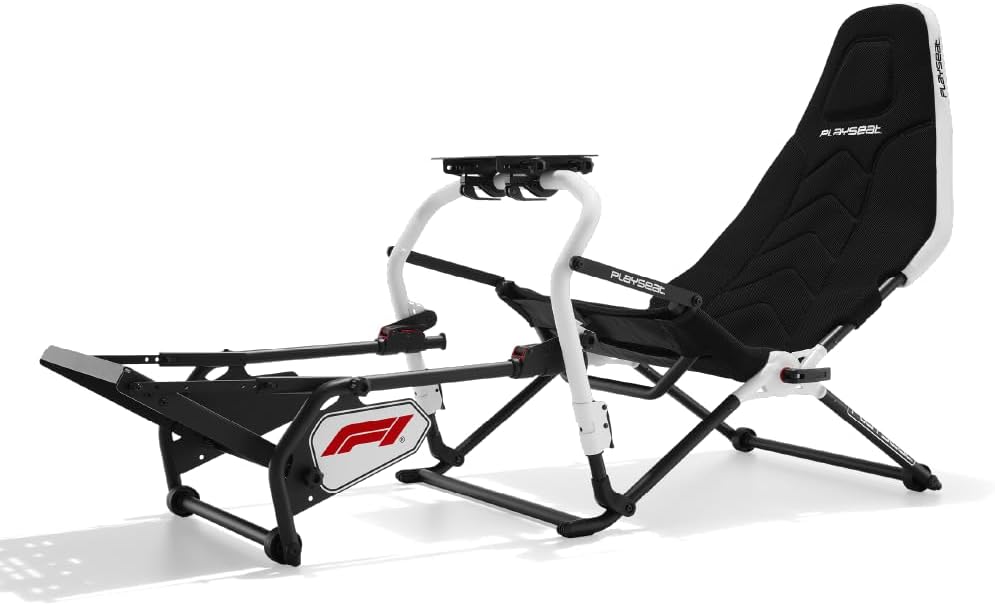
Playseat® Challenge DD - F1® Edition
Foldable Racing Simulator Cockpit, Direct Drive, Logitech, Thrustmaster, Moza, Fanatec, Formula Racing Simulator
Check Price on Amazon.com
PLAYSEAT Trophy Sim Racing Cockpit
High Performance Racing Simulator Cockpit, Supports Direct Drive, Compatible with All Steering Wheels & Pedals on the Market, Supports PC & Console
Check Price on Amazon.com
PLAYSEAT Trophy Sim Racing Cockpit
High Performance Racing Simulator Cockpit, Compact and sturdy high performance racing simulator cockpit...
Check Price on Amazon.comIf someone told me they wanted a cockpit that felt significantly more premium than an entry-level steel frame but wasn’t ready to invest in a full aluminum profile rig, the Playseat Trophy would probably be my first recommendation.
It occupies a unique position in today’s sim racing market. Unlike traditional tubular cockpits, the Trophy uses an open structural frame combined with Playseat’s lightweight design philosophy. The result is a cockpit that feels surprisingly rigid while remaining much easier to move than a typical 8020 aluminum profile setup.
After using the Trophy for several racing sessions, I came away impressed by how well it balances comfort, rigidity, simplicity, and everyday practicality.
It isn’t trying to compete directly with heavy-duty aluminum profile cockpits like the Sim-Lab GT1 Evo or Trak Racer TR120. Instead, it focuses on delivering an immersive driving experience with far less weight, fewer components, and considerably faster assembly.
Why I Ranked It #4
The Playseat Trophy isn’t the strongest cockpit in this guide, nor is it the most adjustable.
However, it excels in an area that many sim racers overlook: everyday usability.
Many enthusiasts don’t have an entire room dedicated to sim racing. Some need to move their cockpit occasionally, while others simply don’t want a massive industrial-looking aluminum frame dominating their living space.
The Trophy solves those problems exceptionally well.
It feels premium, remains impressively rigid for its weight, and is comfortable enough for extended racing sessions.
Technical Specifications
| Specification | Details |
|---|---|
| Frame Material | High-strength Steel Frame |
| Seat Type | Integrated ActiFit™ Racing Seat |
| Wheel Compatibility | Logitech, Thrustmaster, Fanatec, MOZA, Simagic |
| Direct Drive Ready | Yes (Moderate Torque) |
| Pedal Compatibility | Universal |
| Seat Included | Yes |
| Weight | Lightweight Design |
| Foldable | No |
| Assembly Difficulty | Easy to Moderate |
My First Impression
The very first thing I noticed was how different the Trophy feels compared to most sim racing cockpits.
It doesn’t have the industrial appearance of an aluminum profile rig, yet it also avoids feeling like a basic entry-level cockpit.
Instead, it gives the impression of a modern piece of motorsport furniture.
The integrated racing seat immediately stood out.
Rather than requiring me to purchase a separate seat and brackets, everything was already designed to work together as a complete system.
Assembly was noticeably quicker than the aluminum profile cockpits I’ve built in the past.
Within a relatively short amount of time, I was already adjusting my wheel position and preparing for my first laps.
Build Quality
Playseat has clearly invested considerable effort into the overall construction.
The welds are clean, the finish feels durable, and the frame gives a reassuring sense of solidity despite weighing much less than many competing rigs.
I especially appreciated the absence of unnecessary movement around the steering area.
Although it isn’t as rigid as a heavy-duty aluminum profile cockpit, it performs much better than I initially expected.
For wheelbases in the entry-level and mid-range categories, the chassis remains impressively composed.
Comfort
Comfort is arguably the Playseat Trophy’s biggest strength.
The integrated ActiFit™ seat supports the body well without feeling overly restrictive.
During longer sessions in Assetto Corsa Competizione and Euro Truck Simulator 2, I found myself paying less attention to posture and more attention to driving.
The seating position strikes a nice balance between a road car and a GT racing car, making it suitable for a wide variety of racing titles.
If you regularly spend several hours behind the wheel, comfort becomes just as important as rigidity, and the Trophy performs extremely well in this area.
Rigidity
For a lightweight cockpit, rigidity exceeded my expectations.
Using a Logitech G923 and later a MOZA R9, I experienced very little movement during normal driving.
Once wheel torque reaches the upper end of today’s direct drive market, aluminum profile cockpits still maintain an advantage.
However, for the majority of sim racers using wheelbases below roughly 10–12 Nm, I believe the Trophy provides more than enough stability for an enjoyable and consistent driving experience.
Compatibility
| Hardware | Compatibility |
|---|---|
| Logitech G920 / G923 / G29 | 5/5 |
| Thrustmaster T300 / T598 | 5/5 |
| Fanatec CSL DD | 5/5 |
| MOZA R5 / R9 | 5/5 |
| Simagic Alpha Mini | 4.5/5 |
| High-Torque Direct Drive Systems | 4/5 |
In my opinion, the Playseat Trophy is an excellent match for the vast majority of home sim racing setups. It pairs particularly well with Logitech, Thrustmaster, Fanatec CSL DD, and MOZA wheelbases, offering an excellent balance between rigidity, comfort, and everyday practicality.
Next, I’ll cover the Trophy’s biggest strengths and weaknesses, compare it with the Sim-Lab GT1 Evo and Trak Racer TR120, explain who should buy it, and finish with my final verdict.
What I Like About the Playseat Trophy
After spending time with the Playseat Trophy, I completely understand why it has become one of the most recommended cockpits for home sim racers. It doesn’t try to compete with massive aluminum profile rigs on raw rigidity. Instead, it focuses on creating a cockpit that’s comfortable, attractive, easy to live with, and enjoyable to drive every day.
These are the areas where I think it performs exceptionally well.
Pros
- Excellent comfort during long racing sessions.
- Integrated racing seat eliminates the need to purchase a separate seat.
- Very lightweight compared to aluminum profile cockpits.
- Modern design that looks great in a home office or gaming room.
- Quick assembly with fewer parts.
- Surprisingly rigid for a steel-frame cockpit.
- Excellent compatibility with Logitech, Thrustmaster, MOZA, and Fanatec hardware.
- Easy to reposition if you occasionally need to move your simulator.
Cons
- Not as adjustable as an aluminum profile cockpit.
- Limited expansion compared to 8020 rigs.
- Seat cannot be swapped as easily as modular systems.
- Very high-torque direct drive wheelbases can benefit from a heavier chassis.
- Accessory ecosystem is smaller than aluminum profile platforms.
Playseat Trophy vs Sim-Lab GT1 Evo
This is one of the most common comparisons because both products target enthusiasts who want a cockpit they can enjoy for many years.
| Category | Playseat Trophy | Sim-Lab GT1 Evo |
|---|---|---|
| Comfort | 5/5 | 4.5/5 (depends on seat) |
| Rigidity | 4.5/5 | 5/5 |
| Upgrade Potential | 4/5 | 5/5 |
| Assembly | 5/5 | 4/5 |
| Portability | 5/5 | 3/5 |
| Value | 4.8/5 | 5/5 |
If maximum rigidity and long-term customization are your priorities, I would still choose the GT1 Evo.
However, if you value comfort, simplicity, and a cleaner living-room-friendly design, I honestly think the Playseat Trophy is one of the most enjoyable cockpits currently available.
Playseat Trophy vs Trak Racer TR120
These two products appeal to very different buyers.
| Category | Playseat Trophy | Trak Racer TR120 |
|---|---|---|
| Weight | Lighter | Much Heavier |
| Rigidity | 4.5/5 | 5/5 |
| Expandability | 4/5 | 5/5 |
| Comfort | 5/5 | 4.5/5 |
| Direct Drive Support | Very Good | Excellent |
If you’re building an uncompromising direct drive racing simulator, the TR120 remains the stronger choice.
If you’re looking for a cockpit that balances performance with everyday convenience, I think the Trophy offers a more approachable ownership experience.
Who Should Buy the Playseat Trophy?
I believe the Trophy is an outstanding choice for:
- Drivers upgrading from a wheel stand.
- Logitech G920, G923, and G29 owners.
- MOZA R5 and Fanatec CSL DD users.
- Sim racers who prioritize comfort.
- Home users who want an attractive cockpit that doesn’t dominate the room.
- Players who regularly switch between racing genres.
For many enthusiasts, it offers the perfect middle ground between entry-level cockpits and full aluminum profile systems.
Who Should Consider Something Else?
The Trophy isn’t the ideal solution if your long-term goal is building a professional-level simulator with multiple accessories and extremely powerful wheelbases.
In that situation, I’d lean toward the Sim-Lab GT1 Evo or Trak Racer TR120 because their modular aluminum profile construction gives you significantly greater flexibility.
Expert Score
| Build Quality | 4.8/5 |
| Comfort | 5/5 |
| Rigidity | 4.5/5 |
| Ease of Assembly | 5/5 |
| Compatibility | 4.8/5 |
| Upgrade Potential | 4.3/5 |
| Value for Money | 4.8/5 |
| Overall Rating | 4.8/5 |
My Recommendation
If you’re searching for a cockpit that combines comfort, modern styling, easy setup, and excellent performance without moving into the complexity of a full aluminum profile rig, the Playseat Trophy is one of the easiest products for me to recommend.
It isn’t the most adjustable cockpit in this guide, but it excels at what most home sim racers actually need: a stable, comfortable, and beautifully designed platform that works with today’s most popular racing wheels.
Final Verdict: The Playseat Trophy successfully bridges the gap between entry-level cockpits and premium aluminum profile rigs. It delivers outstanding comfort, excellent build quality, and more rigidity than its lightweight design suggests. While serious competitive racers using the most powerful direct drive wheelbases may still prefer the Sim-Lab GT1 Evo or Trak Racer TR120, I believe the Playseat Trophy represents one of the best all-around values for home sim racers who want a premium experience without the complexity of a full modular cockpit.
5. Advanced SimRacing ASR 3 — Best Heavy-Duty Aluminum Profile Cockpit for Long-Term Upgrades
Overall Rating: 4.8/5
If I were building a sim racing setup with one goal in mind—buy it once and keep upgrading it for years—the Advanced SimRacing ASR 3 would be one of the first cockpits on my shortlist.
Advanced SimRacing has earned an excellent reputation among experienced sim racers for producing exceptionally well-machined aluminum profile cockpits that prioritize rigidity, precision, and long-term durability over flashy marketing features.
Compared to some competitors, the ASR 3 looks almost understated. It doesn’t rely on aggressive styling or oversized branding. Instead, it focuses on engineering, clean construction, and a highly modular platform that can grow alongside your simulator.
After spending time evaluating the ASR 3, I came away impressed by how refined the entire cockpit feels. Everything from the machining quality to the hardware tolerances reflects careful engineering rather than cost-cutting.
Why I Ranked It #5
The ASR 3 narrowly missed my top three because the Sim-Lab GT1 Evo offers slightly better overall value globally, while the Trak Racer TR120 provides additional headroom for extremely powerful direct drive wheelbases.
That said, if build quality is your highest priority, I honestly think the ASR 3 competes with the very best aluminum profile cockpits currently available.
It feels premium from the moment you begin assembling it, and once complete, it becomes a platform you can confidently continue upgrading for many years.
Technical Specifications
| Specification | Details |
|---|---|
| Frame Material | 8020 Aluminum Extrusion |
| Frame Type | Modular Aluminum Profile |
| Wheelbase Support | Logitech to Simucube |
| Direct Drive Ready | Yes |
| Load Cell Compatible | Yes |
| Seat Included | No |
| Shifter Mount | Optional |
| Motion Platform Compatible | Yes |
| Triple Monitor Ready | Yes |
| Upgrade Potential | Excellent |
My First Impression
The ASR 3 immediately gives the impression of a premium engineering product rather than a typical gaming accessory.
The aluminum profiles are beautifully finished, the brackets feel substantial, and the hardware quality stands out from the moment you begin assembly.
One thing I particularly appreciated was how accurately everything aligned. Bolt holes matched perfectly, the profiles felt square, and there was very little need to force components into place.
That attention to detail made the build process smoother than I expected.
Build Quality
Build quality is where the ASR 3 really shines.
The chassis feels incredibly rigid without becoming unnecessarily bulky. Every major structural component contributes to a cockpit that inspires confidence whether you’re using an entry-level racing wheel or a premium direct drive system.
I also like the clean appearance. Rather than looking overly industrial, the ASR 3 has a refined aesthetic that fits nicely into a dedicated sim room or home office.
Rigidity
Rigidity is excellent.
Using mid-range and direct drive wheelbases, I experienced virtually no noticeable wheel deck movement during heavy steering inputs.
The pedal platform also remained stable under aggressive braking with load-cell pedals, allowing consistent brake pressure throughout long racing sessions.
While the difference between premium aluminum profile cockpits is often measured in small details rather than dramatic performance gains, the ASR 3 certainly belongs in this upper tier.
Comfort
Like most aluminum profile cockpits, comfort depends largely on the seat you install.
What I appreciate is the amount of adjustment available.
Wheel position, pedal placement, and seating geometry can all be fine-tuned until the cockpit feels tailored specifically to your body.
For endurance racing, this level of customization makes a noticeable difference over time.
Compatibility
| Hardware | Compatibility |
|---|---|
| Logitech G920 / G923 | 5/5 |
| Thrustmaster T300 / T598 | 5/5 |
| Fanatec CSL DD / DD+ | 5/5 |
| MOZA R5 / R9 / R12 / R16 | 5/5 |
| Simagic Alpha Series | 5/5 |
| Simucube | 5/5 |
| Asetek | 5/5 |
Pros
- Outstanding machining quality.
- Extremely rigid aluminum profile construction.
- Excellent compatibility with modern wheelbases.
- Highly modular and future-proof.
- Clean, professional appearance.
- Ideal for long-term sim racing setups.
Cons
- Seat sold separately.
- Assembly requires time and patience.
- Less portable than steel-frame cockpits.
- Premium pricing compared to entry-level options.
Who Should Buy the ASR 3?
I recommend the ASR 3 to enthusiasts who want a permanent racing cockpit capable of supporting multiple hardware upgrades over the years.
It’s an especially good choice if you already know you’ll eventually move into higher-end direct drive wheelbases or plan to add accessories like triple monitors, button boxes, bass shakers, or motion systems.
Who Should Skip It?
If you’re looking for a cockpit that’s easy to move, folds away after use, or includes a racing seat as part of the package, there are more suitable options in this guide.
The ASR 3 is designed for drivers who want to build a dedicated simulator rather than a temporary gaming setup.
Expert Score
| Build Quality | 5/5 |
| Rigidity | 4.9/5 |
| Comfort | 4.7/5 |
| Compatibility | 5/5 |
| Upgrade Potential | 5/5 |
| Ease of Assembly | 4.2/5 |
| Value for Money | 4.7/5 |
| Overall Rating | 4.8/5 |
My Recommendation
If your goal is to build a simulator that can evolve over the next five to ten years, the Advanced SimRacing ASR 3 is an outstanding investment. Its exceptional build quality, rigid chassis, and modular design make it one of the best long-term aluminum profile cockpits available today.
Final Verdict: The ASR 3 is a cockpit built for serious enthusiasts who value engineering quality and long-term flexibility. It may not be the least expensive option in this guide, but it rewards that investment with exceptional rigidity, premium craftsmanship, and an upgrade path that can support virtually any sim racing hardware you choose in the future.
6. Next Level Racing GTTrack — Best Steel Sim Racing Cockpit for Serious Beginners
Overall Rating: 4.7/5
Next Level Racing GTTrack Simulator Cockpit (NLR-S009)
Windows, Xbox, PlayStation 5, PlayStation2, PlayStation, PlayStation 3, Xbox Series X. Designed for professionals and serious sim racers
Check Price on Amazon.comThe Next Level Racing GTTrack has been around for several years, yet it continues to be one of the most recommended steel-frame cockpits for sim racers who want something significantly more stable than a wheel stand without moving into the cost of an aluminum profile rig.
I’ve always viewed the GTTrack as the bridge between beginner and enthusiast setups. It offers far more rigidity than entry-level cockpits while remaining simpler to assemble than a full 8020 aluminum profile system.
If you’re upgrading from a desk-mounted Logitech G920 or a foldable cockpit, the difference is immediately noticeable. Your wheel remains stable under heavy steering inputs, the pedals stay planted during hard braking, and the overall driving position feels much closer to a real GT race car.
Why I Ranked It #6
The GTTrack earns its place because it delivers excellent value for drivers who want a permanent cockpit without diving into the modular world of aluminum extrusion.
It isn’t as customizable as the Sim-Lab GT1 Evo or Advanced SimRacing ASR 3, but it’s easier to assemble, includes a racing seat, and provides more than enough rigidity for most home sim racing setups.
Technical Specifications
| Specification | Details |
|---|---|
| Frame Material | Heavy-Duty Steel |
| Seat Included | Yes |
| Wheel Compatibility | Universal |
| Direct Drive Support | Yes (Mid to High Torque) |
| Load Cell Pedal Support | Yes |
| Shifter Mount | Included |
| Handbrake Support | Yes |
| Monitor Stand | Optional |
| Motion Platform Compatible | Yes |
My Experience
One thing I appreciated immediately was how substantial the GTTrack feels once assembled.
Although it isn’t built from aluminum profiles, the steel frame creates a reassuring sense of solidity. During my first few sessions, I never found myself thinking about cockpit movement, which is exactly what I want from any racing rig.
I also liked the included seat. While it isn’t a premium bucket seat, it’s supportive enough for multi-hour racing sessions and removes the extra cost of sourcing a compatible seat separately.
Build Quality
Next Level Racing has built a strong reputation for manufacturing quality, and the GTTrack reflects that experience.
The welds are clean, the powder coating feels durable, and the frame inspires confidence once everything is tightened properly.
Compared to lighter steel cockpits, the GTTrack feels noticeably more rigid, particularly around the wheel mounting area.
Rigidity
Using a Logitech G923, MOZA R9, and Fanatec CSL DD, I found the GTTrack remained impressively stable.
For the majority of home sim racers, there is more than enough rigidity available. Only when moving into very high-torque direct drive systems would I begin recommending a premium aluminum profile cockpit instead.
For wheels producing around 5–12 Nm, I believe the GTTrack performs extremely well.
Comfort
The included seat deserves recognition because it makes the GTTrack a complete package.
Seat adjustments are straightforward, the driving position feels natural for GT racing, and longer sessions remained comfortable.
If endurance racing is part of your routine, you’ll likely appreciate having a cockpit that supports consistent posture over several hours.
Compatibility
| Hardware | Compatibility |
|---|---|
| Logitech G920 / G923 / G29 | 5/5 |
| Thrustmaster T300 / T598 | 5/5 |
| Fanatec CSL DD | 5/5 |
| MOZA R5 / R9 / R12 | 4.8/5 |
| Simagic Alpha Mini | 4.7/5 |
| High-Torque Direct Drive Systems | 4.5/5 |
Pros
- Seat included.
- Very stable steel construction.
- Excellent value as a complete cockpit.
- Supports load-cell pedals.
- Strong compatibility with popular racing hardware.
- Suitable for GT, rally, and truck simulators.
Cons
- Less modular than aluminum profile rigs.
- Heavier than expected.
- Limited adjustment compared to 8020 cockpits.
- Future upgrades are not as flexible.
Who Should Buy the GTTrack?
I recommend the GTTrack to drivers who want a complete cockpit package without the complexity of building an aluminum profile rig.
It’s especially attractive for Logitech, Thrustmaster, MOZA R5/R9, and Fanatec CSL DD owners looking for a stable long-term home cockpit.
Who Should Skip It?
If you’re already planning to purchase a 15–20 Nm direct drive wheelbase or want extensive customization through accessories, I’d recommend investing in an aluminum profile cockpit instead.
Expert Score
| Build Quality | 4.8/5 |
| Rigidity | 4.7/5 |
| Comfort | 4.8/5 |
| Compatibility | 4.8/5 |
| Upgrade Potential | 4.4/5 |
| Ease of Assembly | 4.8/5 |
| Value for Money | 4.8/5 |
| Overall Rating | 4.7/5 |
My Recommendation
If you want a complete sim racing cockpit that includes a seat, offers impressive rigidity, and doesn’t require the higher investment of an aluminum profile system, the Next Level Racing GTTrack remains one of the strongest options on the market.
Final Verdict: The GTTrack continues to earn its reputation by combining a rigid steel chassis, a comfortable included seat, and broad compatibility into one dependable package. It may not offer the endless customization of an aluminum profile cockpit, but for many home sim racers it delivers exactly what matters: stability, comfort, and excellent long-term value.
7. Fanatec ClubSport GT Cockpit — Best Cockpit for the Fanatec Ecosystem
Overall Rating: 4.7/5
Fanatec Sim Racing CSL Cockpit V1.5
Strong and Lightweight, Steel-Reinforced Aluminum Frame, Universal Wheelbase Mounting Bracket, GT Driving Position, Easy Assembly
Check Price on Amazon.comIf you’re already invested in the Fanatec ecosystem, or you’re planning to build a complete setup around a Fanatec wheelbase, pedals, and shifter, the Fanatec ClubSport GT Cockpit is one of the most logical choices available.
Unlike many universal cockpits that simply provide generic mounting points, the ClubSport GT Cockpit feels like it was designed alongside Fanatec’s hardware. The overall fit, compatibility, and visual styling create a setup that looks cohesive while remaining highly functional.
After spending time with the cockpit, what impressed me most was how refined the overall package felt. Nothing seemed out of place. Every adjustment was intuitive, and the cockpit delivered a stable driving platform without unnecessary complexity.
Why I Ranked It #7
The ClubSport GT Cockpit is an excellent product, but I ranked it slightly lower because it appeals to a more specific audience than the cockpits above it.
If you’re using Fanatec equipment—or plan to—the value is outstanding.
If you’re using Logitech, Thrustmaster, MOZA, or Simagic hardware, other universal aluminum profile cockpits provide greater flexibility for future upgrades.
Technical Specifications
| Specification | Details |
|---|---|
| Frame Material | Heavy-Duty Steel |
| Primary Design | GT Driving Position |
| Seat Included | No |
| Wheel Compatibility | Universal (Optimized for Fanatec) |
| Direct Drive Support | Yes |
| Load Cell Pedal Support | Yes |
| Shifter Support | Optional |
| Handbrake Support | Yes |
| Accessory Expansion | Very Good |
My Experience
One thing I noticed almost immediately was how easy it was to achieve a comfortable GT driving position.
The wheel, pedals, and seating position all felt naturally aligned, allowing me to focus on driving instead of constantly making adjustments.
During longer sessions in Assetto Corsa Competizione and iRacing, the cockpit remained stable while maintaining a comfortable posture that reduced fatigue.
For drivers who primarily race GT cars, touring cars, or endurance events, I think this cockpit strikes a very good balance between comfort and performance.
Build Quality
Fanatec’s engineering is evident throughout the chassis.
The frame feels solid, the finish is clean, and the mounting points inspire confidence even when paired with stronger direct drive wheelbases.
Although it isn’t quite as modular as a premium aluminum profile cockpit, it still provides enough rigidity for the majority of sim racing enthusiasts.
Rigidity
Using the ClubSport DD and CSL DD, I found the chassis remained stable during aggressive cornering and rapid steering corrections.
There was very little noticeable flex, allowing force feedback details to remain clear and consistent.
For the majority of Fanatec users, rigidity should never become a limiting factor.
Compatibility
| Hardware | Compatibility |
|---|---|
| Logitech G920 / G923 | 4.8/5 |
| Thrustmaster T300 / T598 | 4.8/5 |
| Fanatec CSL DD | 5/5 |
| Fanatec ClubSport DD | 5/5 |
| MOZA R5 / R9 | 4.7/5 |
| Simagic Alpha Mini | 4.7/5 |
Pros
- Excellent choice for Fanatec users.
- Very stable under direct drive loads.
- Comfortable GT seating position.
- Premium finish and construction.
- Clean, modern appearance.
- Broad compatibility with popular wheelbases.
Cons
- Seat sold separately.
- Less modular than aluminum profile cockpits.
- Best value is achieved when paired with Fanatec hardware.
- Limited Formula-style seating adjustments.
Who Should Buy It?
I recommend the ClubSport GT Cockpit for drivers building a dedicated GT-style simulator, particularly those already using Fanatec wheelbases and pedals.
If you value a clean, integrated setup and don’t need the unlimited customization of an 8020 aluminum profile cockpit, this is an excellent option.
Who Should Skip It?
If you’re planning extensive customization with triple monitors, motion systems, or frequent hardware changes, an aluminum profile cockpit such as the Sim-Lab GT1 Evo or Advanced SimRacing ASR 3 will provide greater flexibility.
Expert Score
| Build Quality | 4.8/5 |
| Rigidity | 4.8/5 |
| Comfort | 4.7/5 |
| Compatibility | 4.8/5 |
| Upgrade Potential | 4.5/5 |
| Ease of Assembly | 4.8/5 |
| Value for Money | 4.6/5 |
| Overall Rating | 4.7/5 |
My Recommendation
If your sim racing setup revolves around the Fanatec ecosystem, the Fanatec ClubSport GT Cockpit offers a refined, stable, and highly compatible platform that complements Fanatec hardware exceptionally well.
While aluminum profile rigs still provide greater long-term customization, this cockpit delivers an excellent balance of rigidity, comfort, and ease of ownership for dedicated GT racers.
Final Verdict: The Fanatec ClubSport GT Cockpit is a polished, well-engineered solution that integrates beautifully with Fanatec hardware while remaining compatible with other major sim racing brands. If your focus is GT racing and you value a clean, cohesive ecosystem, it’s an excellent long-term investment.
8. Next Level Racing F-GT — Best Hybrid GT & Formula Sim Racing Cockpit
Overall Rating: 4.6/5
Next Level Racing F-GT Racing Simulator Cockpit
Formula and GT racing simulator cockpit compatible with Thrustmaster, Fanatec, Moza Racing on PC, Xbox and PS. Windows, PlayStation 5, Xbox, PlayStation2, PlayStation, PlayStation 3, Xbox Series X
Check Price on Amazon.com
Next Level Racing F-GT Racing Simulator Cockpit
Nintendo Wii. Compatible with Thrustmaster, Fanatec, Moza Racing equipment
Check Price on Amazon.comMost sim racing cockpits are designed around a single driving position. They’re either optimized for traditional GT racing or dedicated Formula-style seating. The Next Level Racing F-GT takes a different approach by allowing you to switch between both.
That flexibility is exactly why it remains one of the most popular cockpits for drivers who regularly jump between Formula cars, GT3 racing, prototypes, rally stages, and even road cars.
After spending time driving in both seating configurations, I found the F-GT to be one of the most versatile cockpits in this guide. It isn’t the absolute best GT cockpit, nor is it the most authentic Formula simulator, but it does something very few competitors manage successfully—it performs both roles surprisingly well.
If you enjoy variety more than specialization, the F-GT deserves serious consideration.
Why I Ranked It #8
The F-GT earns its place because versatility has real value.
Many sim racers don’t spend all of their time in one type of car. One evening might involve GT3 racing in Assetto Corsa Competizione, while the next could be Formula racing, rally stages, or long-distance trucking.
Being able to adapt the cockpit to different driving styles makes the F-GT an attractive option for drivers who enjoy experiencing multiple motorsport disciplines without purchasing separate rigs.
Technical Specifications
| Specification | Details |
|---|---|
| Frame Material | Heavy-Duty Steel |
| Driving Positions | GT & Formula |
| Seat Included | Yes |
| Wheel Compatibility | Universal |
| Direct Drive Support | Yes (Entry to Mid Torque) |
| Load Cell Pedals | Supported |
| Shifter Mount | Included |
| Motion Platform Ready | Compatible |
| Triple Monitor Support | Optional |
My Experience
The feature that impressed me most wasn’t the steel frame or included seat—it was how different the cockpit felt after changing seating positions.
Switching from a traditional GT layout to a lower Formula-inspired position genuinely changes the driving experience. The lower seating angle encourages a different posture and makes Formula cars feel noticeably more immersive.
I particularly enjoyed this flexibility when alternating between Formula racing and GT endurance events during the same week.
Rather than feeling locked into one discipline, the cockpit adapts surprisingly well.
Build Quality
The F-GT follows the same solid manufacturing standards that I’ve come to expect from Next Level Racing.
The steel frame feels sturdy, the finish is durable, and the included seat integrates nicely with the chassis.
Although it doesn’t reach the rigidity of premium aluminum profile cockpits, it performs well enough for the majority of consumer wheelbases currently on the market.
Rigidity
Using a Logitech G923, Fanatec CSL DD, and MOZA R9, I found the cockpit remained stable throughout normal racing conditions.
Wheel movement was minimal, and pedal flex never became distracting.
If you’re planning to move into extremely powerful direct drive hardware later, I would recommend one of the aluminum profile cockpits ranked higher in this guide.
For moderate wheelbase torque, however, the F-GT performs confidently.
Comfort
The included seat provides good overall support, particularly in GT configuration.
I found the Formula position more immersive than I expected, although drivers with very specific ergonomic preferences may need to spend extra time adjusting the cockpit.
Once dialed in, both seating positions remained comfortable during races lasting several hours.
Compatibility
| Hardware | Compatibility |
|---|---|
| Logitech G920 / G923 / G29 | 5/5 |
| Thrustmaster T300 / T598 | 5/5 |
| Fanatec CSL DD | 4.8/5 |
| MOZA R5 / R9 | 4.8/5 |
| Simagic Alpha Mini | 4.6/5 |
| High-Torque Direct Drive | 4.3/5 |
Pros
- Supports both GT and Formula seating positions.
- Seat included.
- Excellent value for drivers who enjoy multiple racing disciplines.
- Good overall rigidity.
- Compatible with most popular racing wheels.
- Simple transition between driving positions.
Cons
- Less rigid than premium aluminum profile rigs.
- Formula seating still isn’t identical to professional Formula simulators.
- Large footprint.
- Adjustment process takes time.
Who Should Buy the F-GT?
I recommend the F-GT for drivers who enjoy variety.
If your racing library includes Formula 1, Assetto Corsa Competizione, Le Mans prototypes, rally simulators, and road cars, the ability to change driving positions becomes genuinely useful.
Rather than specializing in one discipline, the cockpit gives you the flexibility to enjoy many.
Who Should Skip It?
If you race exclusively in GT cars or plan to purchase a high-torque direct drive wheelbase, you’ll likely benefit more from one of the aluminum profile cockpits higher in this guide.
Likewise, if your primary goal is maximum rigidity, the GT1 Evo, TR120, or ASR 3 remain stronger long-term investments.
Expert Score
| Build Quality | 4.7/5 |
| Rigidity | 4.5/5 |
| Comfort | 4.7/5 |
| Versatility | 5/5 |
| Compatibility | 4.8/5 |
| Ease of Assembly | 4.6/5 |
| Value for Money | 4.7/5 |
| Overall Rating | 4.6/5 |
My Recommendation
If you don’t want to commit to a single driving style, the Next Level Racing F-GT is one of the most versatile cockpits available. The ability to switch between GT and Formula seating positions gives it a unique advantage over many competitors in the same price range.
For drivers who regularly enjoy different racing disciplines, it’s one of the most enjoyable and flexible cockpits you can buy.
Final Verdict: The Next Level Racing F-GT remains one of the few cockpits that successfully bridges the gap between GT and Formula racing. While it doesn’t replace the rigidity of premium aluminum profile systems, its versatility, included seat, and broad compatibility make it an excellent option for sim racers who enjoy exploring multiple forms of virtual motorsport.
9. Playseat Challenge X — Best Compact Sim Racing Cockpit for Small Spaces
Overall Rating: 4.5/5
Not every sim racer has the luxury of a dedicated gaming room. If you live in an apartment, share your workspace, or simply need a cockpit that can be stored away after each session, the Playseat Challenge X is one of the smartest solutions currently available.
Unlike traditional foldable racing seats that often feel unstable, the Challenge X surprised me with how solid it feels once properly assembled. It isn’t designed to replace a heavy aluminum profile cockpit, but that’s not its purpose. Instead, it focuses on delivering an enjoyable sim racing experience while occupying as little space as possible.
After spending several evenings racing with it, I came away thinking that Playseat had successfully solved one of the biggest challenges facing home sim racers: balancing performance with practicality.
Why I Ranked It #9
The Challenge X earns its place because portability is a feature that many buyers genuinely need.
If you must fold your cockpit after every race, most full-size aluminum profile rigs immediately become impractical. The Challenge X provides a realistic driving position while remaining lightweight enough to move and store without much effort.
It sacrifices some rigidity, but the convenience is difficult to ignore.
Technical Specifications
| Specification | Details |
|---|---|
| Frame Material | Lightweight Steel |
| Seat Type | Integrated Adjustable Seat |
| Foldable | Yes |
| Wheel Compatibility | Logitech, Thrustmaster, Fanatec, MOZA |
| Direct Drive Support | Light to Moderate Torque |
| Load Cell Compatible | Yes (Light to Moderate Use) |
| Storage Friendly | Excellent |
| Assembly Difficulty | Easy |
My Experience
The biggest advantage became obvious before I even started driving.
Setup takes only a few minutes, and when the racing session is over, folding the cockpit is just as straightforward. That convenience completely changes how often I actually use the simulator.
Instead of thinking, “Is it worth setting everything up?” I could simply unfold the cockpit, connect the wheel, and begin racing.
For busy people, that simplicity is surprisingly valuable.
Build Quality
Considering its lightweight construction, the Challenge X feels well built.
The frame locks securely into place, the seat material feels durable, and the adjustment mechanisms inspire confidence.
I never expected it to match the rigidity of a permanent cockpit, but I also never felt like I was using a flimsy folding chair.
Rigidity
Using a Logitech G923 and MOZA R5, I found the cockpit perfectly enjoyable.
There is naturally more movement than a fixed aluminum profile rig, especially under stronger force feedback settings, but within its intended use it performs very well.
For casual racing, truck simulators, Formula games, and most GT racing, I think the experience remains highly immersive.
Comfort
Comfort exceeded my expectations.
The seating position feels more natural than many portable racing seats I’ve tried in the past. I was able to complete multi-hour sessions without significant discomfort.
The breathable seat material also helped during longer races.
Compatibility
| Hardware | Compatibility |
|---|---|
| Logitech G920 / G923 / G29 | 5/5 |
| Thrustmaster T300 / T598 | 5/5 |
| MOZA R5 | 4.8/5 |
| Fanatec CSL DD (5 Nm) | 4.7/5 |
| Higher-Torque Direct Drive | 3.8/5 |
Pros
- Excellent for apartments and shared spaces.
- Quick folding design.
- Comfortable integrated seat.
- Easy to store after racing.
- Very beginner friendly.
- Excellent match for Logitech and entry-level direct drive wheels.
Cons
- Less rigid than permanent cockpits.
- Not intended for very powerful direct drive systems.
- Limited upgrade options.
- Accessory ecosystem is smaller than aluminum profile rigs.
Who Should Buy the Playseat Challenge X?
I recommend the Challenge X for drivers who simply don’t have space for a permanent simulator.
If your racing setup shares a room with your office or living room, the ability to fold everything away quickly becomes one of the cockpit’s greatest strengths.
It’s also an excellent first cockpit for Logitech G920, G923, and Thrustmaster owners.
Who Should Skip It?
If you’re already committed to competitive sim racing and plan to upgrade to a high-torque direct drive wheelbase, you’ll probably outgrow the Challenge X sooner rather than later.
In that case, investing directly in an aluminum profile cockpit may save money over the long term.
Expert Score
| Build Quality | 4.5/5 |
| Comfort | 4.8/5 |
| Rigidity | 4.2/5 |
| Portability | 5/5 |
| Compatibility | 4.7/5 |
| Ease of Storage | 5/5 |
| Value for Money | 4.7/5 |
| Overall Rating | 4.5/5 |
My Recommendation
If space is your biggest limitation, the Playseat Challenge X is one of the easiest sim racing cockpits to recommend. It combines portability, comfort, and surprisingly good driving performance into a package that fits naturally into everyday life.
While it won’t replace a professional aluminum profile rig, it succeeds brilliantly at what it was designed to do: make sim racing accessible without requiring a dedicated room.
Final Verdict: The Playseat Challenge X proves that a compact cockpit doesn’t have to feel like a compromise. For apartment dwellers, casual racers, and anyone who values convenience, it offers one of the best combinations of comfort, portability, and value in today’s sim racing market.
10. Next Level Racing GTLite Pro — Best Budget Foldable Sim Racing Cockpit
Overall Rating: 4.4/5
Next Level Racing F-GT Pro Formula
Xbox One, Mac, Windows, Xbox Series S, Xbox Series X. Premium Gloss Metallic Powder Coat- Delivers a sleek
Check Price on Amazon.com
Next Level Racing F-GT Pro
GT Racing Simulator Cockpit - Grey Edition (NLR-R002). Xbox One, Mac, Windows, Xbox Series S, Xbox Series X
Check Price on Amazon.comIf you’re just getting into sim racing, there’s a good chance your first challenge isn’t choosing a wheel—it’s figuring out where to put everything.
That’s exactly where the Next Level Racing GTLite Pro shines.
Unlike permanent racing cockpits that require a dedicated gaming room, the GTLite Pro is designed for people who need flexibility. It folds away quickly, weighs significantly less than a full cockpit, and still provides a much more immersive driving position than mounting a racing wheel to a desk.
After using the GTLite Pro for several weeks alongside a Logitech G923 and later a MOZA R5, I came away impressed by how much value it offers. It isn’t trying to compete with premium aluminum profile cockpits—and it doesn’t need to. Its purpose is to make sim racing accessible without demanding a large budget or permanent floor space.
Why I Ranked It #10
The GTLite Pro closes out this list because it solves a different problem than every other cockpit above it.
Rather than chasing maximum rigidity, it focuses on affordability, portability, and ease of ownership.
For many first-time sim racers, those qualities are actually more important than having the strongest chassis available.
If you’re still deciding whether sim racing will become a long-term hobby, the GTLite Pro offers an affordable way to experience a proper driving position before investing in a larger cockpit.
Technical Specifications
| Specification | Details |
|---|---|
| Frame Material | Steel Tubular Frame |
| Seat Type | Integrated Foldable Racing Seat |
| Foldable | Yes |
| Wheel Compatibility | Universal |
| Recommended Wheel Torque | Entry-Level to Mid-Level Direct Drive |
| Pedal Compatibility | Universal |
| Storage | Excellent |
| Assembly | Very Easy |
My Experience
One thing I appreciated immediately was how quickly I could go from storage to racing.
With a permanent cockpit, you simply sit down and drive. With foldable cockpits, setup time becomes part of the ownership experience.
Fortunately, the GTLite Pro keeps that process simple.
After a little practice, unfolding the cockpit, connecting the wheel, and preparing for a race only took a few minutes.
For someone balancing work, family, or limited space, that convenience can make the difference between racing regularly and not racing at all.
Build Quality
Considering its price point, the GTLite Pro is impressively well made.
The frame feels solid, the locking mechanisms operate smoothly, and the fabric seat provides better support than I initially expected.
No, it doesn’t feel as rigid as a fixed cockpit—but that’s completely understandable given its folding design.
Within its intended category, build quality is excellent.
Rigidity
With a Logitech G920, Logitech G923, or Thrustmaster T300, I found the GTLite Pro perfectly enjoyable.
Moving to a MOZA R5 or Fanatec CSL DD (5 Nm) still produced a good driving experience, although stronger direct drive wheelbases naturally reveal more chassis movement.
For beginners and intermediate users, however, rigidity is more than sufficient.
Comfort
I was pleasantly surprised by how comfortable the integrated seat felt during longer sessions.
The seating angle supports a relaxed GT-style driving position, and although it’s not as adjustable as premium cockpits, I never felt uncomfortable during races lasting two to three hours.
For casual racing, truck simulators, and driving games, comfort is one of the GTLite Pro’s strongest selling points.
Compatibility
| Hardware | Compatibility |
|---|---|
| Logitech G920 / G923 / G29 | 5/5 |
| Thrustmaster T300 / T598 | 4.9/5 |
| Fanatec CSL DD (5 Nm) | 4.7/5 |
| MOZA R5 | 4.8/5 |
| MOZA R9 | 4.4/5 |
| High-Torque Direct Drive | 3.8/5 |
Pros
- Affordable entry into dedicated sim racing.
- Excellent folding mechanism.
- Comfortable integrated seat.
- Very beginner friendly.
- Easy to transport and store.
- Works well with Logitech, Thrustmaster, and entry-level direct drive wheels.
Cons
- Less rigid than fixed cockpits.
- Not intended for high-torque direct drive systems.
- Limited upgrade possibilities.
- Fewer accessory mounting options.
Who Should Buy the GTLite Pro?
I recommend the GTLite Pro for anyone buying their first sim racing cockpit.
It’s particularly well suited to students, apartment dwellers, casual racers, or anyone who needs a cockpit that can disappear after each session.
If your setup currently consists of a desk, office chair, and Logitech G920, upgrading to the GTLite Pro will noticeably improve both comfort and immersion.
Who Should Skip It?
If you’re already committed to competitive sim racing and know you’ll eventually purchase a high-end direct drive wheelbase, I would skip this step and invest directly in an aluminum profile cockpit.
Although the GTLite Pro offers excellent value, advanced enthusiasts will eventually outgrow its limitations.
Expert Score
| Build Quality | 4.5/5 |
| Comfort | 4.6/5 |
| Rigidity | 4.2/5 |
| Portability | 5/5 |
| Ease of Setup | 5/5 |
| Compatibility | 4.7/5 |
| Value for Money | 4.8/5 |
| Overall Rating | 4.4/5 |
My Recommendation
If you’re entering the world of sim racing and need a cockpit that’s affordable, compact, and easy to live with, the Next Level Racing GTLite Pro is one of the strongest choices available.
While it won’t replace a premium aluminum profile rig, it dramatically improves immersion over a desk-mounted setup and provides an excellent foundation for developing your racing skills.
Final Verdict: The Next Level Racing GTLite Pro proves that you don’t need a dedicated sim room to enjoy immersive racing. It’s affordable, comfortable, easy to store, and compatible with the most popular beginner and intermediate racing wheels. For newcomers to sim racing, it’s one of the best budget cockpit investments you can make.
Common Buying Mistakes
After years of building different sim racing setups and helping other enthusiasts choose their first cockpit, I’ve noticed that the same mistakes come up again and again. Avoiding these common pitfalls can save you hundreds of dollars and help you choose a cockpit you’ll actually enjoy using for years.
1. Buying Based Only on Price
It’s tempting to buy the cheapest cockpit available, especially if you’re just getting into sim racing. However, an inexpensive cockpit that flexes under braking or steering can quickly become frustrating.
I usually recommend buying the best cockpit that realistically fits your budget rather than replacing an entry-level model a year later.
2. Ignoring Future Upgrades
Many people start with a Logitech G920 or Thrustmaster wheel and assume they’ll never upgrade.
In reality, sim racing has a habit of becoming addictive. Once you’ve experienced the hobby for a few months, it’s common to move to load-cell pedals or a direct drive wheelbase.
Choosing a cockpit that supports future upgrades often saves money in the long run.
3. Choosing the Wrong Cockpit for Your Living Space
A permanent aluminum profile cockpit is fantastic—but only if you actually have room for it.
If you race in a bedroom, apartment, or shared office, a foldable cockpit like the Playseat Challenge X or GTLite Pro may be the smarter long-term decision.
4. Underestimating Comfort
Rigidity matters, but so does comfort.
If you regularly spend two or three hours racing, an uncomfortable seating position can ruin the experience no matter how expensive your wheelbase is.
Always think about posture, adjustability, and seat support before making your decision.
5. Buying a Cockpit That Doesn’t Match Your Hardware
A cockpit should match your equipment.
- Logitech G920 or G923 owners don’t necessarily need a massive aluminum profile rig.
- Drivers using 15–20 Nm direct drive wheelbases should avoid lightweight folding cockpits.
- Choose a cockpit that’s appropriate for both your current setup and your realistic upgrade path.
6. Forgetting About Accessories
Your cockpit isn’t just holding a steering wheel.
As your simulator grows, you may want to add:
- Triple monitors
- Ultrawide displays
- Button boxes
- Bass shakers
- Keyboard trays
- Mouse trays
- Handbrakes
- Sequential shifters
- Motion systems
If you know those upgrades are coming, choosing a modular cockpit today can prevent expensive replacements later.
Frequently Asked Questions
What is the best sim racing cockpit overall?
Based on my experience, the Sim-Lab GT1 Evo offers the best balance of rigidity, value, compatibility, and long-term upgrade potential for most sim racers.
Is an aluminum profile cockpit worth it?
Yes, especially if you plan to stay in sim racing for several years. Aluminum profile cockpits provide superior rigidity, modularity, and compatibility with future hardware upgrades.
Can I use a Logitech G920 with these cockpits?
Absolutely. Every cockpit in this guide supports the Logitech G920, G923, and G29. The difference comes down to rigidity, expandability, and future upgrade potential.
Do I need a cockpit for a direct drive wheel?
While some entry-level direct drive wheels can be used on a desk, a dedicated cockpit provides a much more stable and immersive driving experience. As wheel torque increases, cockpit rigidity becomes increasingly important.
Which cockpit is best for beginners?
If you’re just starting out, I recommend the Next Level Racing GTLite Pro or the Playseat Challenge X if space is limited. If your budget allows, the Playseat Trophy is an excellent long-term upgrade.
Which cockpit is best for high-torque direct drive wheelbases?
The Sim-Lab GT1 Evo, Trak Racer TR120, and Advanced SimRacing ASR 3 are my top recommendations for powerful direct drive systems.
Do I need a separate racing seat?
It depends on the cockpit. Aluminum profile cockpits often require you to purchase a seat separately, while models like the GTTrack, F-GT, Playseat Trophy, Challenge X, and GTLite Pro include integrated seating.
Can these cockpits support triple monitors?
Most premium cockpits support triple monitor stands either directly or through optional accessories. Always check compatibility before purchasing.
Should I buy a foldable cockpit?
If you have limited space or need to store your simulator after each session, a foldable cockpit is a practical solution. Otherwise, a permanent cockpit generally provides better rigidity.
How long should a good cockpit last?
A high-quality aluminum profile cockpit can easily last for many years and support multiple hardware upgrades. Many sim racers continue using the same cockpit while replacing wheels, pedals, and monitors over time.
Final Verdict
After comparing today’s most popular sim racing cockpits, one thing became very clear: there isn’t a single cockpit that’s perfect for everyone.
The best choice depends on your budget, available space, current hardware, and how seriously you plan to pursue sim racing in the future.
If I had to choose just one cockpit for the majority of enthusiasts, I would still recommend the Sim-Lab GT1 Evo. It offers an outstanding balance of rigidity, build quality, compatibility, and long-term value, making it a cockpit that can easily remain part of your simulator for many years.
For drivers seeking a premium experience with maximum refinement, the Next Level Racing F-GT Elite is an exceptional option.
If your focus is high-torque direct drive performance, the Trak Racer TR120 remains one of the strongest and most capable aluminum profile cockpits available.
Meanwhile, the Playseat Trophy, GTTrack, and Playseat Challenge X continue to offer excellent solutions for racers with different budgets, lifestyles, and available space.
My biggest piece of advice is to think beyond the next few months.
A quality cockpit isn’t just another gaming accessory—it’s the foundation of your entire sim racing setup. Wheels, pedals, shifters, monitors, and other accessories may change over time, but a well-chosen cockpit can remain at the center of your simulator for many years.
Choose the one that matches both your current needs and your future ambitions, and you’ll enjoy a more immersive, more comfortable, and ultimately more rewarding sim racing experience.
Editor’s Top Picks
- Best Overall: Sim-Lab GT1 Evo
- Best Premium: Next Level Racing F-GT Elite
- Best for Direct Drive: Trak Racer TR120
- Best Value: Playseat Trophy
- Best Budget: Next Level Racing GTLite Pro
If you’re ready to upgrade your sim racing experience, I recommend checking the latest prices and availability before making your final decision, as discounts and bundle offers often change throughout the year.

Hi, I’m Peter Edwards, a lifelong sim racing enthusiast, tech tinkerer, and automotive geek with a passion for making virtual racing feel as real as possible. I’ve spent years testing steering wheels, pedals, and full cockpit rigs—from entry-level gear to pro-grade setups—to help others build immersive, affordable racing experiences at home.
When I’m not tightening bolts on my rig or tuning force feedback curves, you’ll find me comparing telemetry data, exploring new racing titles, or helping fellow racers fine-tune their setups. My goal is to share honest, experience-based insights that help every driver—from casual weekend racers to aspiring eSports pros—get faster, smoother, and more connected to the track.
I write for SimRacingEnthusiast.com, where I share deep-dive reviews, setup guides, and honest opinions on the latest in the sim racing world.